
Field service software for office technology dealers
Set every technicianup to win.
Nexera gives service managers the territories, carstock, coaching and bonus plans to run a better department, measured against the dealer community.TFA gives every technician a senior tech's know-how on every call.
Since 1993Formerly BEI ServicesPart of the Valsoft family, with MPS Monitor


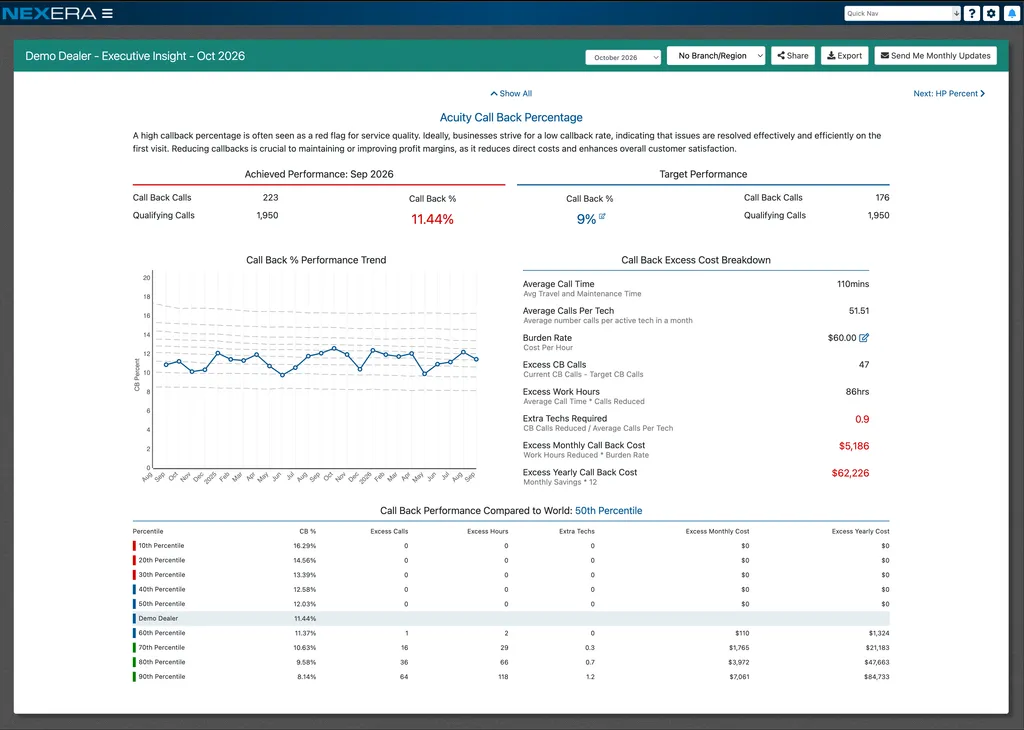
Nexera
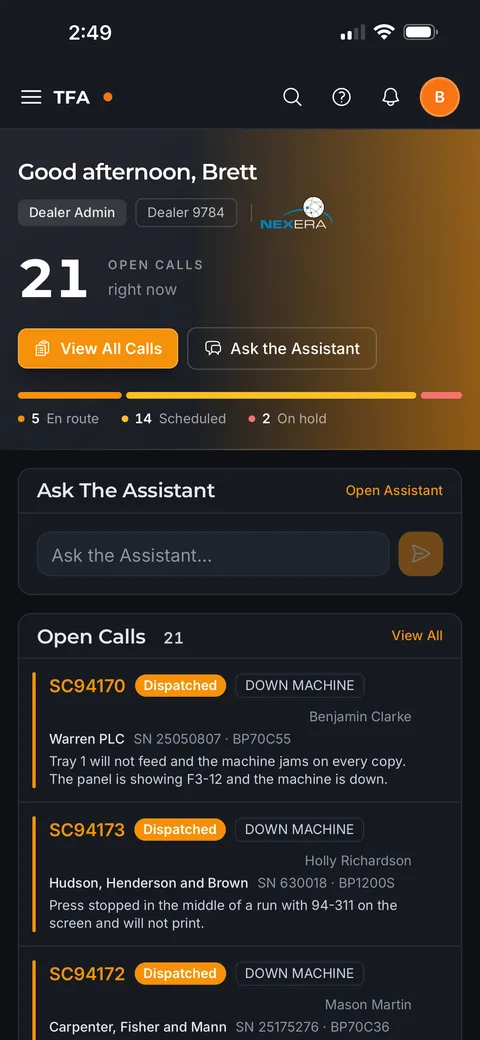
Technician Field Assistant
01 · Nexera and TFA
Nexera sets up the operation. TFA equips the technician on the call.
Nexera sets up territories, carstock, coaching and bonus plans. TFA briefs each technician before the call. Same data, two products.

Sets up the operation
- Territories sized to real demand
- Carstock built from each territory
- Coaching and bonus plans on model-specific standards
- Benchmarks from the dealer community
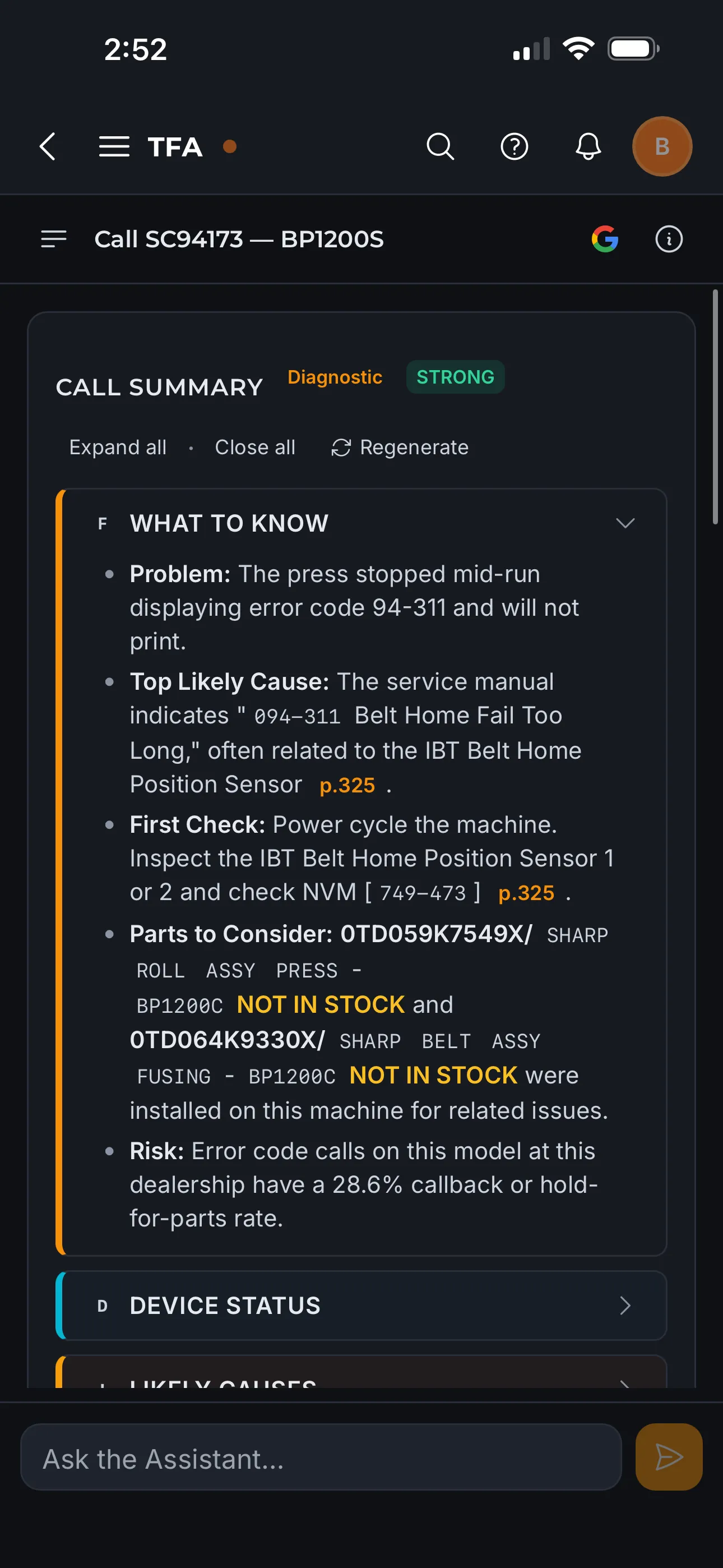
Equips the technician
- A briefing before every call
- Likely causes from real service history
- Recommended parts checked against carstock
- The exact manual page, a tap away
Both products go after the same costs. Here is where service margin goes.
Next: Why it pays02 · Why it pays
Service profit is decided before the call.
Callbacks, hold-for-parts trips, wasted travel and guessed parts all come out of service margin. And managers can't fix what they can't see.
Callbacks
Hold-for-parts trips
Wasted travel
Guessed parts
Results come from the system around the technician.
The equipment they're assigned, the parts they carry, what their manager can see, the expectations they're measured against and the coaching they get. Better service starts by setting technicians up to succeed.
One loop, run every month
- Structure the workTerritories sized to real demand
- Equip techniciansCarstock built from that demand
- Measure performanceAgainst the dealer community
- Coach and incentivizeEvaluations and bonus plans
- Improve, rebalance, repeatAs demand and people change
Nexera runs the whole loop, so each improvement feeds the next.
$138,000 a year
What moving from the median to the top 20% on callbacks and hold-for-parts is worth to a 25-technician dealer, at about $100 a return visit.
Illustrative estimate based on Nexera dealer benchmarks. Not a guarantee or a measured result.
Every one of those costs is set by the system around the technician. It starts with what their manager can see.
Next: Coaching and bonus plans03 · Coaching
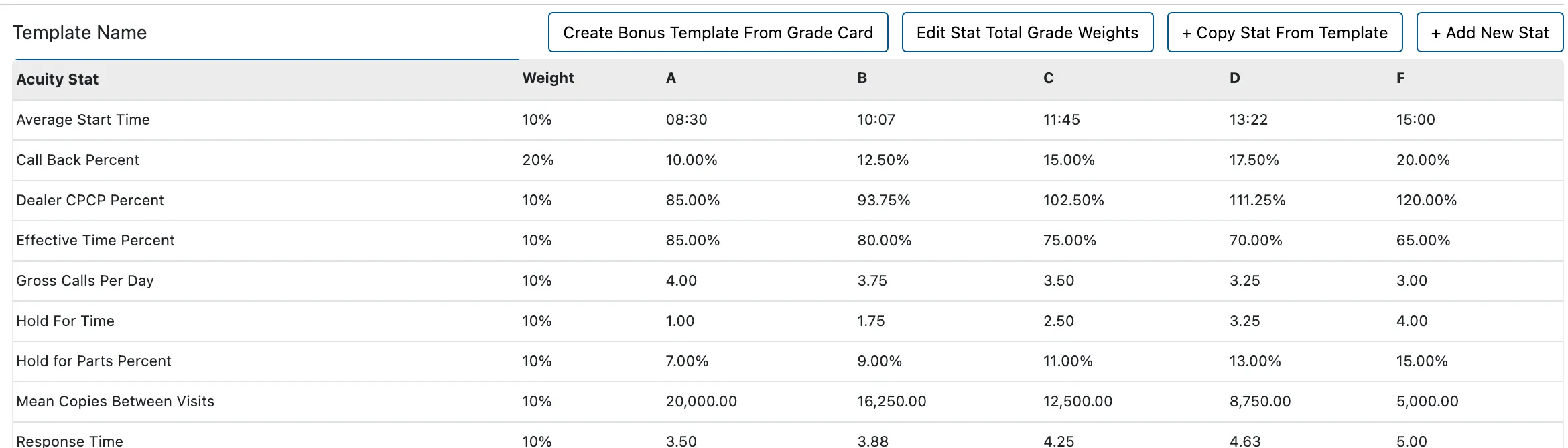
AcuityCoaching and bonus plans that change behavior.
Everyone from executive to technician sees the same performance picture, at their own level. Evaluations, audits and grade cards make coaching routine.
- The same numbers at every levelExecutives, managers, supervisors and technicians each get a dashboard for their role, built from the same data.
- Coaching that happens on scheduleSupervisors run evaluations, audits and grade cards, so feedback is routine rather than an annual event.
- Bonus plans that pay for qualityTechnicians are rewarded for quality calls against model-specific standards, and for the right parts decisions.
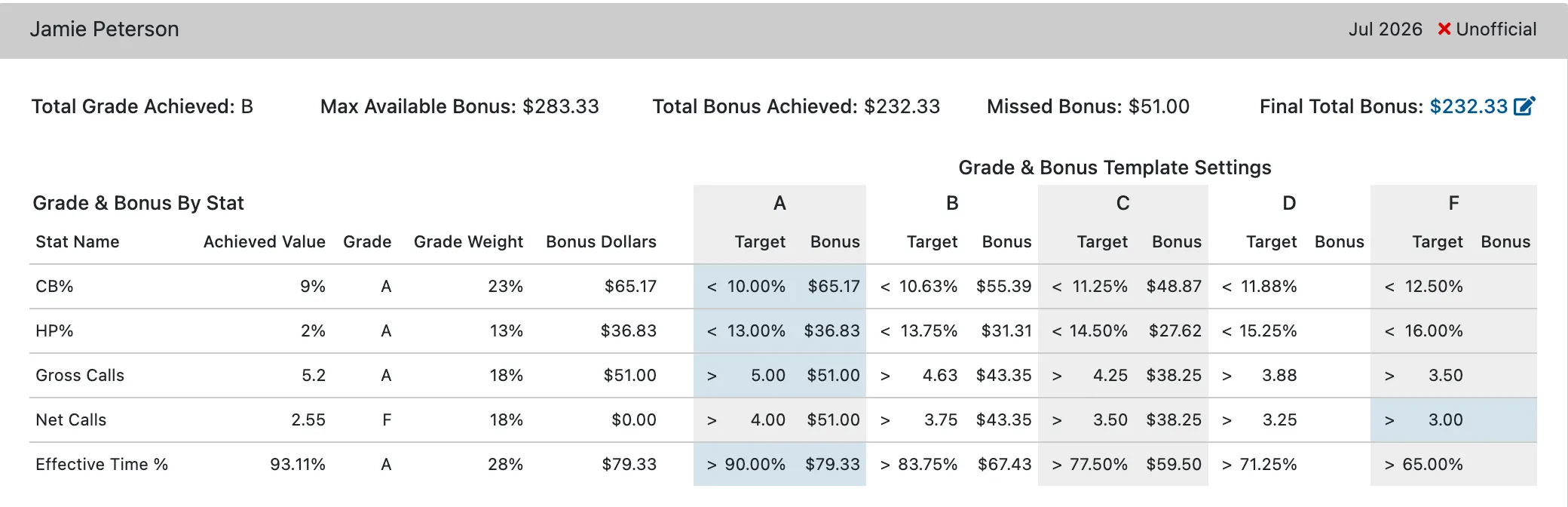
Dealer result
28%lower parts costs at one dealer after it moved its technicians onto a Nexera bonus plan.
Coaching is only fair when the workload is. That starts with the territory.
Next: Territory management04 · Territories
Advanced Territory ManagerTerritories built on demand, not habit.
Map-based territories sized to real demand time, including travel. Matched to technician strengths by model, tested with what-if scenarios, and written back to the ERP.
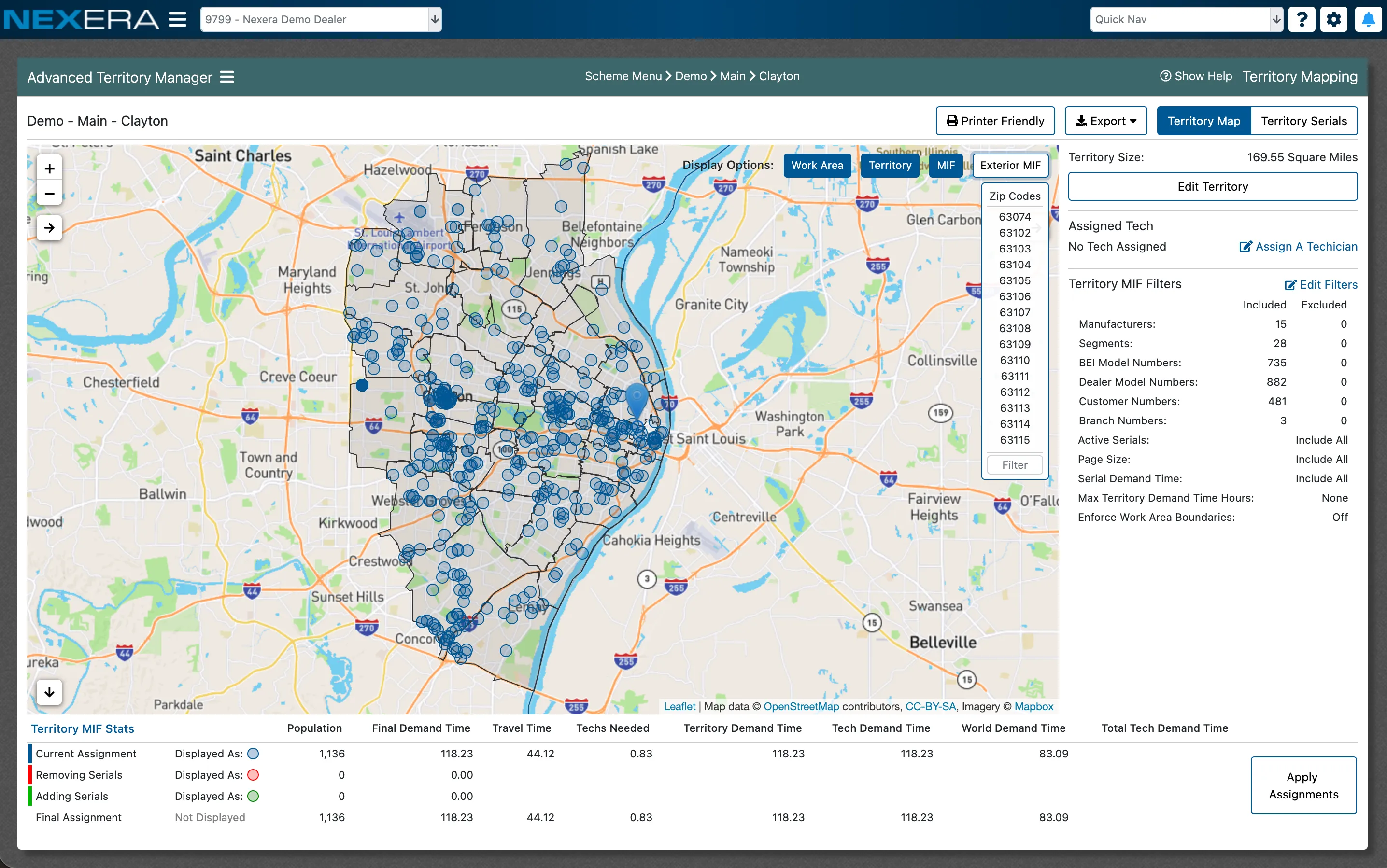
- See your installed base and technicians on one map
- Size each territory to real demand time, including travel
- Match territories to technician strengths by model
- Compare what-if scenarios before you change anything
- Write assignments back to the ERP
Dealer result
Up to 11%higher first-call effectiveness at one dealer after it rebuilt its territories with Nexera.
Also reported
- Hold-for-parts down as much as 10%
- Incompletes held below the 10% company goal
Once each territory matches its demand, you know which parts each vehicle should carry.
Next: Carstock05 · Carstock
The right parts in the right vehicle.
Carstock built from each territory's real demand, so technicians arrive with what they need without tying up inventory.
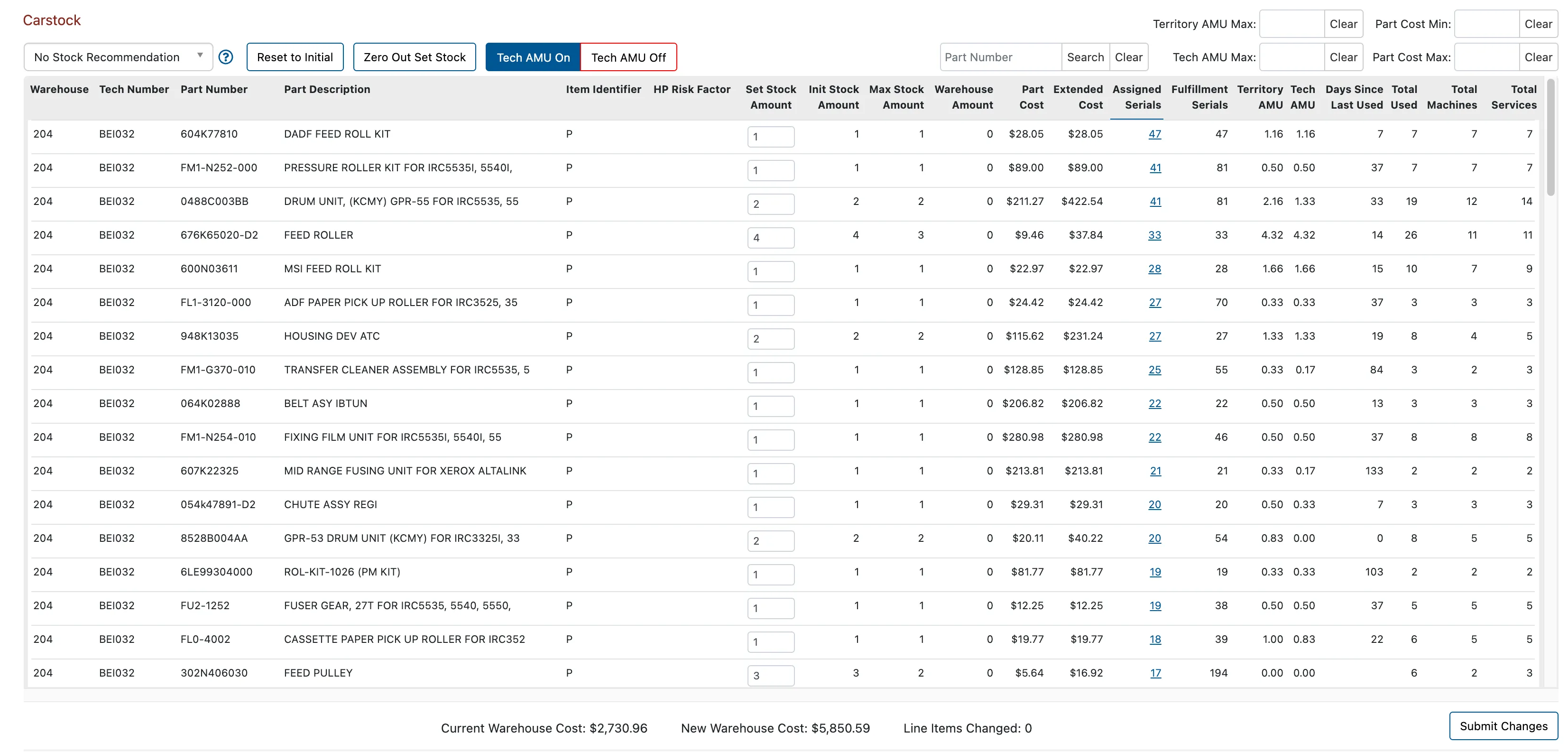
Built from territory demand
Written back to the ERP
Adjusted as territories change
Before each call, TFA checks the parts it recommends against that carstock, so the technician knows what's in the vehicle before the drive.
With the operation set up, the question is how far there is to go.
Next: Benchmarks06 · Benchmarks
Know what good looks like.
World Stats and model-specific standards, built from dealer community data since 1993. Compare yourself to real industry data, and find improvements that are achievable.
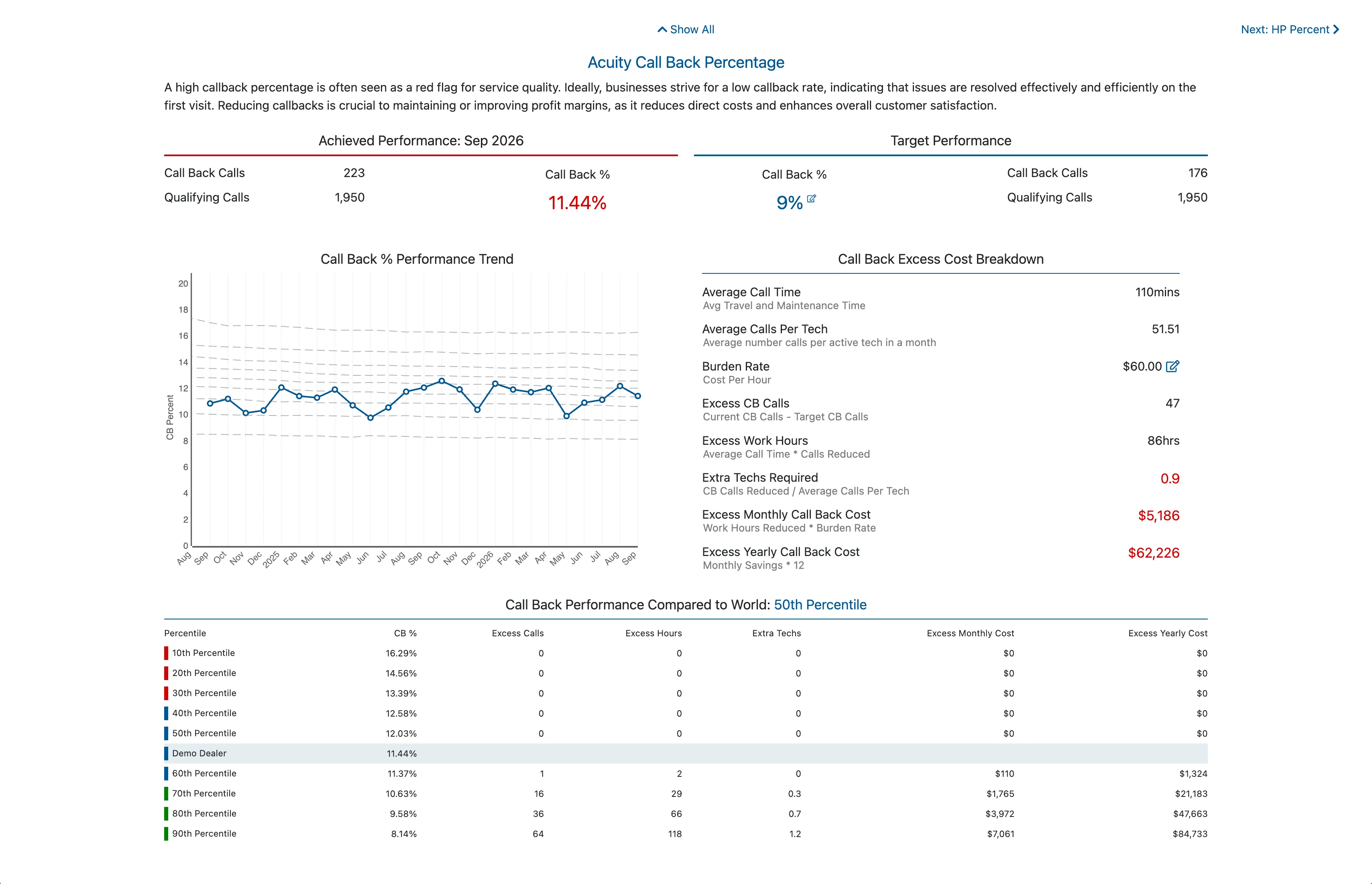
World Stats
Model-specific standards
Targets you can reach
Benchmarks also put a price on the gap.
Next: Proof07 · Proof
What a return visit really costs.
Every callback and hold-for-parts visit costs fuel, labor, and customer patience: roughly $100 a visit, before parts. Nexera benchmarks callback and hold-for-parts rates across the dealer community, so we can show where a typical dealer stands and what closing the gap is worth.
Median dealer
12.05% callbacks
10.24% hold-for-parts
The typical dealer across the dealer community
Top 20% of dealers
9.60% callbacks
6.94% hold-for-parts
80th percentile
Dealers are already performing at the 80th percentile, which makes it a realistic goal.
See the full benchmark table10th – 90th
| Percentile | Callback rate | Hold-for-parts rate |
|---|---|---|
| 10th | 16.43% | 16.95% |
| 20th | 14.69% | 14.70% |
| 30th | 13.54% | 13.11% |
| 40th | 12.62% | 11.59% |
| 50th | 12.05% | 10.24% |
| 60th | 11.40% | 9.07% |
| 70th | 10.68% | 8.09% |
| 80th | 9.60% | 6.94% |
| 90th | 8.17% | 5.09% |
What closing the gap is worth
If a dealer moved from the median to the 80th percentile on both rates, at about $100 a visit:
| Dealer size | Calls per month | Return visits avoided per month | Savings per month | Savings per year |
|---|---|---|---|---|
| Small (10 techs) | 800 | 46 | $4,600 | $55,200 |
| Medium (25 techs) | 2,000 | 115 | $11,500 | $138,000 |
| Large (60 techs) | 4,800 | 276 | $27,600 | $331,200 |
Assumes about 80 calls per technician per month.Illustrative estimate based on Nexera dealer benchmarks. Not a guarantee or a measured result.
Try it with your numbers.
Not sure? Leave the median.
Not sure? Leave the median.
Fuel and labor, not parts.
- Return visits avoided per month
- 115
- Savings per month
- $11,500
- Savings per year
- $138,000
Your callback rate puts you around the 50th percentile.
Your hold-for-parts rate puts you around the 50th percentile.
This counts return visits only. Parts savings and time saved on each call aren't included.
Illustrative estimate based on Nexera dealer benchmarks. Not a guarantee or a measured result.
See your numbers.
We'll compare your callback and hold-for-parts rates to the dealer community and show what closing the gap is worth for your team.
Or email us about a free two-week evaluation: sales@nexera.net
That's the math. Here's what dealers ask before they start.
Next: FAQ08 · FAQ
Questions dealers ask.
Who is Nexera?
Nexera builds service management software for imaging dealers. We've worked with dealers since 1993, formerly as BEI Services, and we're part of the Valsoft family alongside MPS Monitor.
How is Nexera different from TFA?
Nexera sets up the system around your technicians: territories, carstock, coaching and bonus plans, measured against the dealer community. TFA prepares each technician for each call. They share one data foundation and are sold as separate products.
Which ERPs does Nexera work with?
Nexera connects to your ERP through the Nexera agent. Tell us which one you run at sales@nexera.net.
Where do the benchmarks come from?
World Stats and the model-specific standards are built from dealer community data collected since 1993. They show what good looks like for dealers like you.
How do the technician bonus plans work?
Technicians earn credit for the pages on the machines they service, but only when each call meets model-specific call-quality standards. Parts use is measured against cost-per-page targets, with a bonus for coming in under target. First-call effectiveness can adjust the payout, and every plan is customizable.
Are territories a one-time project?
No. You can compare what-if scenarios, rebalance as demand changes, and use smart assignment for day-to-day changes. Every assignment is written back to the ERP.
How do we get started?
Request a demo, or ask for a free two-week evaluation of your service department. Use the contact form or write to sales@nexera.net.
See where your service department stands.
We'll compare your numbers to the dealer community and show where the gains are. Start with a demo, or a free two-week evaluation.